Low Flying Hawks | facebook | bandcamp |
Released on February 12, 2016 via Magnetic Eye Records
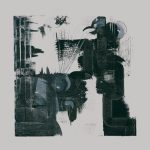
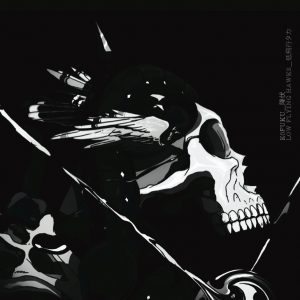
Being enigmatic is tough to achieve. You can’t fake or teach it, you either are or you’re not: it has to appear effortless. And Low Flying Hawks, with their cryptically named band and members (EHA and AAL), precise and visceral album artwork, song titles translated (correctly!) into Japanese and the cold yet laconic, doom-leaning atmospheric noise they produce, make enigmatic appear totally natural.
This is not an album to listen to on a whim – you need to be drawn into the Hawks‘ echo-laden world of sometimes-icy, sometimes-dreamy guitars, thick, occasionally churning bass and mostly super-slow drums (played by Dale Crover of the Melvins, among other bands) before you can get a handle on what you are hearing.
But amid the din, the thing that grabs you early on is the voice of the singer – actually, both of them as the pair are given equal vocal credits. He/they have the gentlest set of pipes to accompany a heavy music band that I have heard in a long time – they sound somewhere between the drawl of J Mascis, the floatiness of Mercury Rev’s Jonathan Donahue and a little of the sleepy delivery of Jesus and Mary Chain’s Williams brothers’ quieter moments.
And that is what raises this album from the mere “good” to genuinely affecting. Let’s face it, there are many, many bands who can play glacial, atmospheric soundscapes juxtaposed with proper riffery – but the voice on here makes the songs on K?fuku something else entirely. And that ‘something else’ is an enigma, which you feel compelled to return to, but you’re not sure why.
‘Now, Apocalypse’, which opens the album for all intents and purposes after the brief instrumental that is the title track (Japanese for surrender), immediately throws the listener into a dirge of distorted bass and funereal drums washed over by ethereal vocals and a lonely guitar. It’s dream pop for metal-heads – strangely soporific, but definitely dark and melancholy. ‘Seafloor Fathoms’ is darker still than the opener, with minor-chord progression from the churning bass with a sombre guitar creeping over the top. But there’s the hypnotic vocals again, to keep you from total bleakness.
And you are given a chink of watery light in the third song ‘Fading Sun’, which is a strong contender for the best on the album. A descending guitar gives a sonic image of the final glimpses of a wintry, pale red sun sinking below the horizon – and as it goes down, the vocals get progressively harsher and the guitar goes from a series of single notes to wall-of-sound fuzz. As six-minute aural experiences go, it’s up with the best.
‘White Temple’ raises the tempo briefly to slightly below a resting heart rate – and allows Crover to cut loose a little – before a 40-second interlude, ‘Kokkai’ (Black Sea), which involves a mournful cello, introduces ‘Ruins’, one of the more accessible tracks on the album, with its repetitive, chugging riff.
Things lag ever so slightly at the beginning of ‘Wolves Within Wolves’, but the song is rescued two minutes in with a beautiful guitar interlude, which segues into a crunching riff which, if it wasn’t for the vocals (OK, I’ll stop going on about the vocals), could be mistaken for an outtake from Sabbath’s Master of Reality.
And another brief interlude, ‘Till the Night Meets the Light’, this time courtesy of Trevor Dunn of Mr Bungle and his upright bass, another contender for song of the album rumbles into our ears: the 10-minute closer, ‘Destruction Complete’. It is epic. I could go on and on about the varying moods, soundscapes and shades, but that would merely colour your own experience of the song. Just rest assured it is well worthy of your full attention.
Apart from the vocals – I know, I promised, but still – the producer Toshi Kasai deserves praise for making this album sound immense, foreboding and yet still very, very satisfying and warm. It was recorded at Sound of Sirens studios in North Hollywood, California (not nearly as glamorous as it sounds), but Kasai has managed to make K?fuku sound as if it was recorded in a massive, far-off, stone desert temple in some enigmatic location.
Enigmatic – that word again. And, need I remind you, it’s something you can’t teach. It’s just there.